Donald Trump is Publicly Attacking The Pope — Here's Why

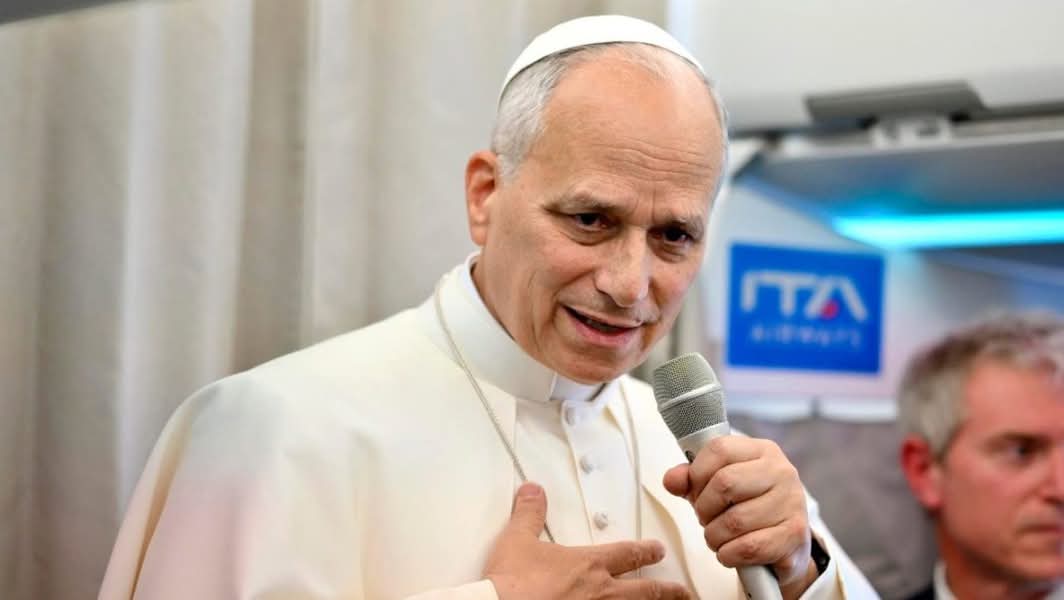
When the leader of the world's 1.4 billion Catholics and the President of the United States publicly clash, it matters — not just for diplomats and theologians, but for everyday Americans trying to make sense of how faith, power, and politics intersect. What started as a congratulatory post has turned into one of the most unusual public disputes between an American president and a sitting pope in modern history.
At the center of the fight is a disagreement over war, rhetoric, and the role of religious leaders in public life. Pope Leo XIV, the first American-born pope, has repeatedly called for peace — specifically in Ukraine, Gaza, and now Iran. President Donald Trump, meanwhile, has threatened Iran with sweeping military force and publicly attacked the pope for daring to push back.
The Pope's First Words Were About Peace
From his very first appearance on the balcony of St. Peter's Basilica, Leo XIV signaled what kind of pope he intended to be. His opening words were: "Peace with you all … the first greeting of the risen Christ, the Good Shepherd who gave his life for the flock of God."
During his first Sunday blessing, he spoke out against the Russian war in Ukraine and the ongoing violence in Gaza, describing them as part of a "third world war in pieces." The following Monday, speaking to journalists, he quoted directly from the Sermon on the Mount: "Blessed are the peacemakers."
Those early statements made clear that Leo planned to apply his religious convictions directly to real-world conflicts — and that put him on a collision course with Trump's more aggressive foreign policy posture.
Who Is Pope Leo XIV?
Before becoming pope, Leo XIV was known as Robert Prevost, a cardinal who had spent years working as a bishop in Peru. He is far from a stranger to political commentary. In 2022, while serving in Peru, he appeared on a local television program called Weekly Expression and condemned Russia's invasion of Ukraine in direct terms, calling it "an imperialist invasion in which Russia wants to conquer territory for reasons of power given Ukraine's strategic location." That footage resurfaced in Italian media after his election.
In early 2025, then-Cardinal Prevost also shared a news analysis on social media that challenged Vice President JD Vance's position on immigration. The headline he shared read: "JD Vance is wrong: Jesus doesn't ask us to rank our love for others."
While Catholic leaders often weigh in on matters of public policy, Prevost's willingness to engage with specific political figures and situations was notable — and it didn't stop once he became pope.
Easter Weekend Brought Things to a Head
The tension between the two men became impossible to ignore over the Easter holiday weekend. During Palm Sunday, Leo XIV delivered a homily describing Jesus as the "King of Peace" and warning that God "does not listen to the prayers of those who wage war, but rejects them, saying: 'Even though you make many prayers, I will not listen: your hands are full of blood.'"
At the same time, Trump was hosting conservative religious leaders at the White House, where one of his advisers, Paula White, reportedly compared Trump to a persecuted savior. On Easter Sunday itself, Trump threatened to bomb Iran's infrastructure and spoke of the "eradication" of what he called a "whole civilization."
The pope's response was swift. He called that kind of language "truly unacceptable."
Trump Fires Back, Pope Stands Firm
Trump responded by labeling Leo "Weak" and a tool of the "Radical Left," and suggested the pope should stay out of political matters. "I don't want a Pope who criticizes the President of the United States because I'm doing exactly what I was elected, IN A LANDSLIDE, to do," Trump wrote, adding that Leo should "focus on being a Great Pope, not a Politician." It is worth noting that Trump's 2024 electoral victory was not considered a landslide by standard measures.
The pope did not back down. Speaking to reporters from the Associated Press while traveling to Algeria, Leo addressed Trump's framing directly: "To put my message on the same plane as what the president has attempted to do here, I think is not understanding what the message of the Gospel is. And I'm sorry to hear that but I will continue on what I believe is the mission of the church in the world today."
He also made clear that political pressure would not change his approach. "I'm not afraid of the Trump administration," Leo said, "or of speaking out loudly about the message of the Gospel, which is what the Church works for."
A Global Leader Who Rejects an American Label
One of the more telling details of Leo's early papacy is how he has chosen to communicate publicly. Despite being American-born, he delivered his first papal announcement in Italian, then switched to Spanish to greet Peruvians. His Sunday blessing was conducted almost entirely in Italian. The choice appears intentional — a way of signaling that he sees himself as a shepherd to the entire world, not a representative of any one country or political tradition.
This stands in sharp contrast to how Trump has framed the pope's identity, repeatedly emphasizing Leo's American origins as though they should bind him to American political priorities. For Leo, that framing misses the point entirely of what his role is meant to be.


