Spirit Airlines Shuts Down: What It Means for Your Next Flight and Your Wallet

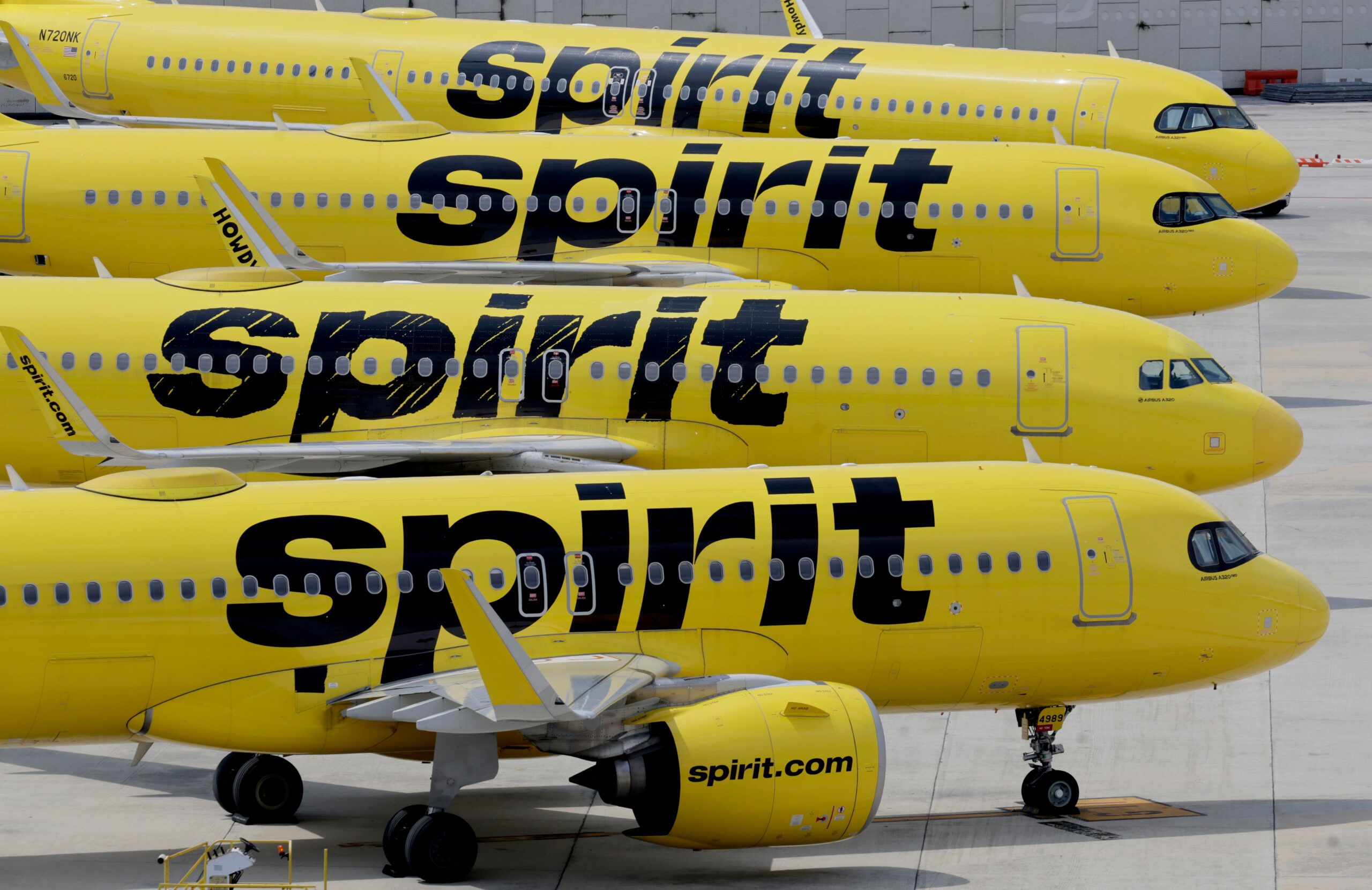
If you have ever booked a flight based on price alone, Spirit Airlines was probably on your radar. For more than three decades, those bright yellow planes made it possible for working families to fly somewhere they might not otherwise have been able to afford — and now, without warning, they are gone.
Spirit Airlines has officially begun winding down all operations, canceling every flight and leaving roughly 17,000 workers without jobs. The abrupt collapse of one of America's most recognizable budget carriers is already raising a serious question for everyday travelers: will airline tickets get more expensive now that a major low-cost option has disappeared?
Why Spirit Collapsed
Spirit had been struggling financially for some time, but a specific chain of events pushed the airline past the point of no return. A sharp increase in jet fuel prices, tied to U.S. military strikes on Iran and disruptions in the Strait of Hormuz — a critical waterway for global oil shipments — added enormous costs in a very short window of time. Spirit's chief financial officer, Fred Cromer, stated in a court declaration that the airline took on nearly $100 million in additional fuel expenses between March and April 30 alone.
Tad DeHaven, a policy analyst at the Cato Institute, a libertarian think tank, pointed to that military action as a contributing factor in Spirit's downfall. He described the decision to strike Iran as "bad foreign policy," saying the conflict drove up jet fuel prices and operating costs at a time when Spirit was already in a fragile financial state. "They were already in trouble," DeHaven said, calling it "a compounding effect in terms of policy."
The Trump administration explored a potential government rescue package of around $500 million for the airline. President Trump said as recently as last Friday that his team had put forward a "final proposal" for a taxpayer-funded takeover. That deal ultimately fell apart after opposition from a group of creditors and some Republican lawmakers. Cromer confirmed the company was told late last week that the potential financing "was no longer an available option."
Passengers and Employees Left in the Dark
Spirit quietly halted flight operations around 3 a.m. on Saturday, timed so that no planes would be airborne mid-route and crew members stranded away from home would have a window to arrange overnight accommodations. The final Spirit flight touched down at Dallas Fort Worth International Airport, arriving from Detroit.
For many passengers, the news arrived not through an email or phone alert — but at the airport itself. At Atlanta's airport, five Spirit flights were still listed as "on time" on departure boards Saturday morning, even as the airline had already shut down.
Taylor Nantang had driven from Tennessee with her husband and four children for a last-minute vacation flight to Miami. She found out at the gate that the airline was finished. "What!?" she said. "So the whole airline at every airport is out of business? Oh my, that's crazy."
Joshua Sigler had purchased his ticket just one day earlier for a Saturday flight to Miami. He said he received no communication at all from Spirit before arriving at the airport. Looking back on his experience with the airline, he kept it brief: "They get you there. It was cheap."
Airline employees were just as blindsided. Former Spirit flight attendant Freddy Peterson had been working a flight from Detroit that landed in Newark around 11 p.m. Friday. He said everything appeared completely normal — more than 200 passengers on board, planes running as usual. He set an alarm for 3 a.m. to check the company website after seeing rumors spread on social media, and that is when he confirmed all flights had been canceled. Delta flew Peterson back to Atlanta the next morning.
"I'll probably do the boo-hoo crying and all that other stuff once I get in my car," Peterson said.
Peterson had worked for Spirit for ten years and said the airline had "done wonders" for him personally. While he pushed back on Spirit's reputation for poor service, he was openly critical of how management handled the final days, noting that a promised employee town hall meeting was canceled without any explanation given to staff.
What Stranded Travelers Should Do Now
Transportation Secretary Duffy said Spirit had set aside a reserve fund to issue refunds to customers who purchased tickets directly through the airline. Travelers who booked through third-party vendors, such as travel agents or booking websites, will need to contact those providers directly to seek reimbursement.
Duffy also said that United, Delta, JetBlue, and Southwest were offering $200 one-way flights to travelers who could show a Spirit confirmation number and proof of purchase, available for a limited time. Several airlines also announced they would offer preferential hiring consideration to displaced Spirit employees.
Spirit stated it would process customer refunds but would not assist passengers in rebooking travel on other carriers. The airline is also working to return more than 1,300 crew members to their home base cities.
What This Means for the Cost of Flying
Budget travelers — especially those flying in and out of markets where Spirit had a heavy presence, including Las Vegas, Fort Lauderdale, and Orlando — are likely to feel the impact most directly. Labor unions representing Spirit's pilots, flight attendants, and ground workers had previously warned that if the airline collapsed, reduced competition in the marketplace would push airfares higher for consumers across the board.
The numbers show just how much Spirit had already contracted before its final shutdown. The airline carried approximately 1.7 million domestic passengers in February — about half a million fewer than the same month a year prior, according to aviation analytics firm Cirium. Available seating capacity this month was roughly half of what Spirit was offering in May 2024.
As part of its court-supervised wind-down, Spirit is seeking approval to sell its aircraft, spare engines, and other assets. The company plans to keep around 150 employees on initially to manage the process, scaling down to approximately 40 workers after the first few months. Retaining those employees through the wind-down is expected to cost at least $10.7 million.
"We are proud of the impact of our ultra-low-cost model on the industry over the last 34 years and had hoped to serve our guests for many years to come," Spirit said in its closing statement.


