Rural Voters and Farmers Are Turning Away From Trump as Farm Bankruptcies Surge

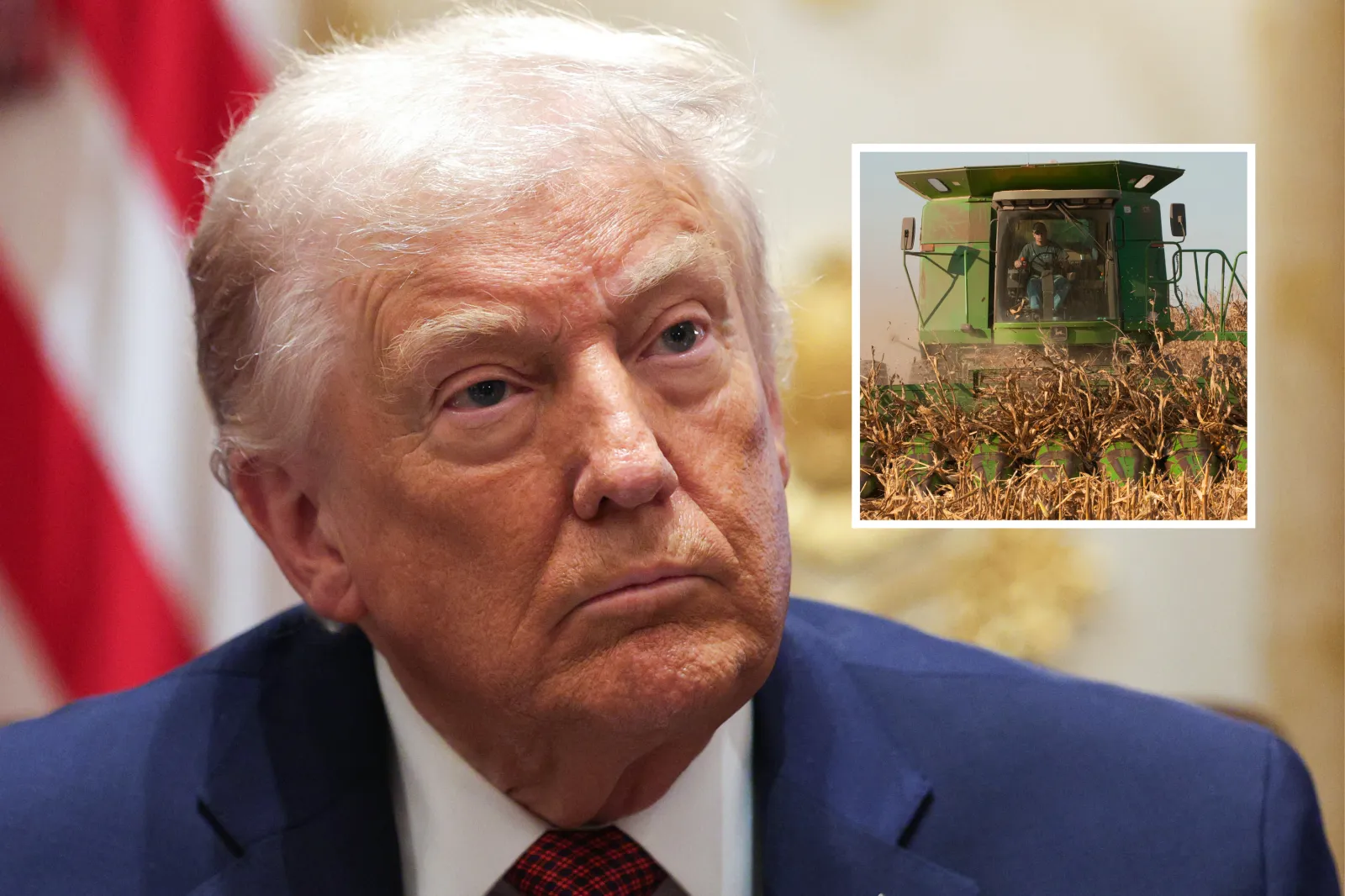
For years, rural America has been one of the most reliable sources of political support for Donald Trump. Now, that foundation is showing serious cracks — and the reasons are rooted in the everyday financial struggles of farmers and rural families across the country.
A new Fox News poll released this week reveals that Trump's approval rating among rural voters has turned negative for the first time since early 2025. The shift is striking in its speed and scale, and it raises real questions about how economic hardship is reshaping political loyalties heading into this year's midterm elections.
What the Poll Actually Shows
The Fox News survey was conducted May 15–18, 2026, among 1,002 registered voters nationwide. It was run jointly by Beacon Research, a Democratic-leaning firm, and Shaw & Company Research, a Republican-leaning firm. Voters were reached by landline, cellphone, and online text-to-web surveys, and the margin of error is plus or minus 3 percentage points.
Trump's overall approval rating sits at 39 percent — just one point above the lowest mark recorded in this polling series. But the more telling numbers come from specific voter groups that have traditionally backed him most strongly.
Among rural voters, Trump's net approval — the difference between those who approve and those who disapprove — has swung 34 points in roughly 14 months. It stood at +20 in early 2025 and has now fallen to -14 in May 2026. The steepest single drop came between April and May of this year, a 16-point decline in just one month.
Among rural white voters specifically, the slide has been nearly as dramatic — from +27 in early 2025 to -6 today, a 33-point reversal in a group that once backed Trump by commanding margins.
Republican pollster Daron Shaw, who co-conducts the survey alongside Democrat Chris Anderson, acknowledged that the erosion is now touching Trump's own political base.
"Despite consistently strong GOP support, the president's numbers are leaking a bit," Shaw said. "Make no mistake; it's all about affordability. Independents jumped ship in 2025, and now non-MAGA Republicans and other core constituencies are wavering."
The Economy Is the Central Issue
Across the poll, economic dissatisfaction is the driving force behind declining approval. Just 29 percent of all voters approve of how Trump is handling the economy, while 71 percent disapprove. Rural voters mirror that sentiment almost exactly — 30 percent approve and 70 percent disapprove.
Inflation is Trump's weakest area by a wide margin. Only 24 percent of voters overall approve of his handling of rising prices, with 76 percent disapproving. Among rural voters, 28 percent approve and 71 percent disapprove — numbers that reflect the real cost pressures squeezing farm households and rural businesses alike.
On foreign policy, Trump is underwater nationally, with 38 percent approval and 62 percent disapproval. Rural voters are somewhat less critical at 42 percent approval, but still tipping negative. Even border security — historically a strong issue for Trump — has slipped into net negative territory nationally for the first time this term, with 49 percent approving and 51 percent disapproving. Rural voters remain slightly more supportive on that issue, at 54 percent approval to 45 percent disapproval.
Farmers Are Feeling It Most
Behind the polling numbers is a worsening financial picture for American agriculture. Farm bankruptcies rose 46 percent in 2025 compared to the prior year, according to the American Farm Bureau Federation. That trend has continued into 2026, with fertilizer and diesel prices climbing sharply due to the escalation of the conflict in Iran and the resulting disruptions to global energy markets.
For farmers already operating on thin margins, these cost increases are pushing many operations to the breaking point.
Willis Nelson, a Louisiana farmer, described the situation plainly in an interview with MS Now. His family has been forced to cut back on fertilizer because, as he put it, "we just don't have the margin."
"We're not financially able" to operate as normal, Nelson said, adding: "It's tough, you know, very tough on us," as his multigenerational farm faces the possibility of bankruptcy.
Fred Yoder, an Ohio farmer, shared similar concerns in comments provided by Farm Action from an interview with US Farm Report. He described the daily operating costs of running a farm as overwhelming under current conditions.
"It's costing us about $1,500 of cash per day to run two tractors," Yoder said. He added that fertilizer prices have reached levels he has never seen in his career. "I spent many years buying potash for $90 a ton, and now it's $670 to $700 a ton. Our big problem is the input costs. I haven't seen anything this bad since the 1980s."
Trade tensions with China have added another layer of difficulty. Reduced Chinese demand for American agricultural exports — particularly soybeans — has left farmers with weaker prices and fewer reliable buyers for their crops.
Adding to rural unease, Trump made comments during a recent trip to Beijing defending Chinese purchases of American farmland, arguing that restricting foreign ownership would hurt land values. For farmers already concerned about foreign control of agricultural land, that position has been unsettling.
The White House Pushes Back
Administration officials are challenging the significance of the poll results, describing them as a temporary snapshot rather than a meaningful shift in how voters view the president.
White House spokesman Kush Desai argued that the American economy has remained "resilient" under Trump's leadership, and suggested that better results lie ahead.
"As this agenda continues taking effect, and as Congress passes more of the president's healthcare and housing affordability agenda, the best is yet to come in the second Trump term," Desai said.
Spokesman Davis Ingle pointed to Trump's 2024 election victory as the more meaningful measure of his support among American voters.
"The ultimate poll was November 5th 2024 when nearly 80 million Americans overwhelmingly elected President Trump to deliver on his popular and commonsense agenda," Ingle said, adding that the administration is "working tirelessly to create jobs, cool inflation, increase housing affordability, and more."
Whether those arguments resonate with farmers watching their costs rise and their margins shrink will likely play out in ways that go far beyond a single poll — particularly as midterm election season approaches and rural communities weigh what the past year has meant for their livelihoods.


